top of page
Saree or Not To Saree? : Kerala Gov and Teacher Dress Codes
2-min read | November 29, 2021
Previously, in 2008, the Kerala government had issued a government circular clarifying how saree is not mandatory workwear, but what followed was twisted interpretations of the given mandate. For instance, the Calcutta high court in the same year, following the complaint of seven teachers in West Bengal, wherein they had been conditioned to wear only white sarees if they wish to enter the classrooms, ruled that such sartorial policies violate the right of personal liberty. On the other hand, Tamil Nadu high court ruled out the demand made by some trichy teachers to allow women teachers to wear churidaar kameez, stating, that they should adhere to 'appropriate dress code', without ever stating what 'appropriate' is, resulting in several government authorities and higher educational institutions to interpret it as an 'only saree' policy for lady teachers, eventually resulting the similar unofficial policy to be followed nationwide. Since then, women teachers have protested several times regarding unnecessary and unfair dress code policing.
This past week, there has been change in the air. Following a complaint registered by a young lecturer in Kodungaloor, Kerala, the Kerala government officially put out a circular reasserting the right of teachers of higher educational institutions to wear whatever they wish.
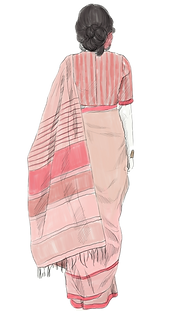
source: Trinisha Mukherjee via ArtStation
What also allows such widespread reinforcement of these unwritten policies is the lack of proper reinforcement of official ones. In addition, moral policing and gender stereotyping also plays a huge role, wherein, it is a given expectation of only women teachers to dress 'modestly' in the name of 'tradition' and 'dignity'.
Often, sartorial policing happens through unofficial channels, wherein, female teachers are policed into wearing sarees as 'dress code' irrespective of their comfort. In several institutions, in case of any deviation, the teachers generally face consequences, regardless of what their qualification level is.

“The government has already made clear its stance in this regard multiple times. Teachers have every right to dress as per their comfort in Kerala regardless of the kind of institutes they work at.,” the state’s Higher Education minister, R. Bindu, said in a statement. “While a teacher has several responsibilities, adhering to such outdated and obsolete ideas is not one of them.", she noted. The 'cultural' bonds surrounding women regarding what they should and shouldn't wear, unfortunately, reared its head here too.
This appropriation not only violates the right to choose, personal liberty and freedom, but also affects one's self esteem and dignity, one's morale and identity. As Vimala Ramachandran of the National University of Educational Planning and Administration told Times of India, “imposing any kind of dress code is irrelevant and ridiculous”
source: Amit Bandre (EPS)
As the circular stated: “The attempts to exercise unnecessary control over teachers in the name of outdated moral ideals cannot be entertained at any cost.” The circular is therefore a progressive step towards the abandonment of regressive policing over women's bodies and choices, providing them more freedom in the social sphere as whole.


bottom of page